Mikla Restaurant, Istanbul, Turkey

After I had posted my impromptu degustation adventures at the Istanbul Culinary Institute on Facebook, my friend Paul recommended that I should also try Mikla. I promptly started researching where Mikla was located, and was pleased to find it was very close to where I was staying.

The next day, I went to the Marmara Pera hotel to make a dinner reservation for my return stay in Istanbul, however as it was a Sunday, the restaurant was closed and unable to take bookings at that point in time. The hotel staff recommended that I come back the next day. Unfortunately I was about to depart for a thirteen day tour of Turkey, so that suggestion wasn’t practicable however I was given an email address to request my preferred date and time for dinner at Mikla. The next day I wrote an email, however I did not receive a reply. I wrote again the following week, and still no reply. By this time, my tour had nearly finished and I had arrived back in Istanbul and at the same hotel I had stayed previously. When I had a spare moment, I walked back to the Marmara Pera hotel and made another request for a dinner reservation. My preferred dining option was for the Saturday night, which would be my last night in Istanbul. But of course, despite my best efforts to secure a table for that evening, the restaurant was fully booked. Thankfully, fortune was on my side and there was one table available which would allow me to dine the next evening. There was just one slight problem … I was also doing a gourmet food and market tour the next day. Ignoring the pain in my stomach, I decided to accept the booking.

The following evening, making my way into the lift to take me to the top floor of the hotel, a huge wave of excitement started to well up inside of me. Upon arrival I was escorted into the dining room with a modern and contemporary elegance, and to a table with beautiful night time views of the Golden Horn and the Blue Mosque in my line of sight.

Mikla Restaurant, Istanbul, Turkey

Looking at the menu, there were various dining options available including a three course prix fixe à la carte menu for 160 TL (AUD $80) and a seven course tasting or degustation menu for 240 TL (AUD $120) with six glasses of matching wines for an additional 120 TL (AUD $60). Despite the effort in securing a table for the evening, the thought of eating seven dishes was not going to be a pleasant or enjoyable experience.

I decided to compromise and select the three course dinner option which would allow me to select my own dishes for each course, and I could use the degustation menu as a guide. The added advantage with the prix fixe à la carte menu, is the opportunity to enjoy three glasses of wine that are matched to my selected courses for 70 TL (AUD $35), which was excellent value in my opinion.

The seven course tasting menu comprised of the following dishes:

  • Vegetables & Zeytinyağlı – Zeytinyağlı, Raw and Other Vegetables
  • Balık Ekmek – Crispy Hamsi, Olive Oil Bread, Lemon
  • Dried Tenderloin & Humus – Salted and Dried Beef Tenderloin, Humus (sic), Antep ‘Birdshit’ Paste
  • Grouper – Slow Cooked Grouper, Sunchokes, Green Lentil, Whole Wheat Erişte, Halhali Olives, Chive-Fig Vinaigrette
  • Lamb Shank – Trakya Kıvırcık Lamb Shank, Smoked Eggplant, Stew of Kayseri Sucuk & White Bean
  • Cheese & Honey – Anatolian Raw Milk Cheese & Honey
  • Pumpkin – Crunchy Candied Pumpkin, Antep ‘Birdshit’ Ice Cream, Sesame Paste, Grape Molasses

Birdshit! I could count three dishes on the entire menu that had a reference to that word. When my waiter came over to ask if I had any questions about the menu, I bravely asked what it meant and discovered that it was a pistachio mixture or paste. Interesting.
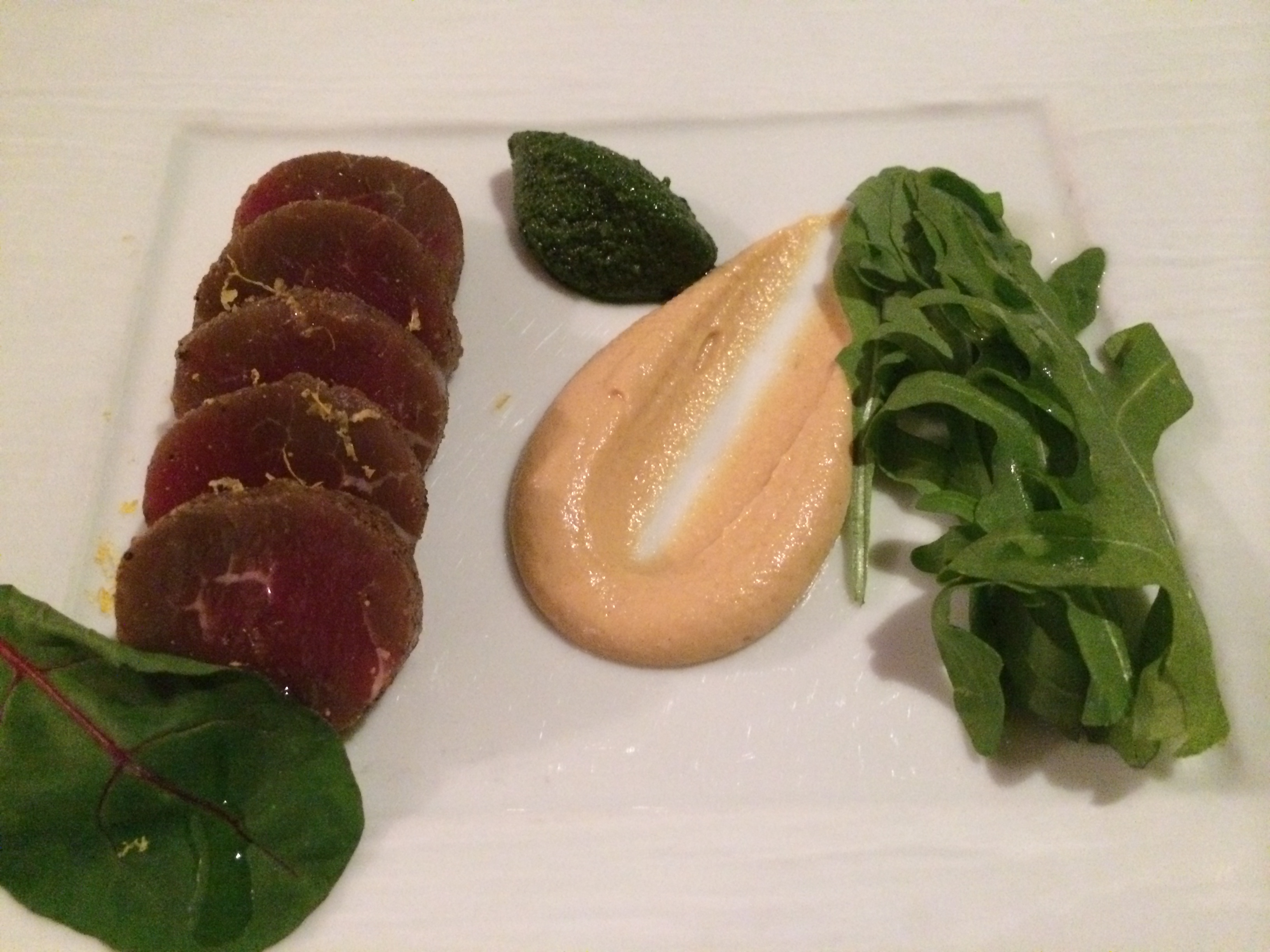
Salted and Dried Beef Tenderloin, Humus, Antep ‘Birdshit’ Paste - Mikla, Istanbul, Turkey
Salted and Dried Beef Tenderloin, Humus, Antep ‘Birdshit’ Paste – Mikla, Istanbul, Turkey

My first selection from the menu was the Dried Tenderloin & Humus. To quote my friend Paul, Turkish wines are a revelation! They are indeed. While I was waiting for my meal, my matched wine was presented and poured – a glass of Plato, 2011 Kalecik Karasi, which proudly displayed a medallion on the bottle announcing that it had scored 90 points at the 2012 Master of Wine (Istanbul). A smooth, dry, medium-bodied red wine with hints of chocolate on the nose. Kalecik Karasi is a Turkish grape variety, which means “black from the small castle” and comes from Aegean wine region of Denizli.

The entrée was delicious but had an interesting presentation. The rocket and other leaf served on the plate looked somewhat out of place with the other elements of the dish, particularly as it was bitter to taste. The birdshit paste was indeed a finely ground pistachio pesto, and did resemble fresh bird dropping when smeared across the white plate. The hummus was a slightly red colour with a creamy texture and went well with the thick cut beef medallions, which were delicious and easy to cut. They were not too salty and looked fresh and full of flavour.
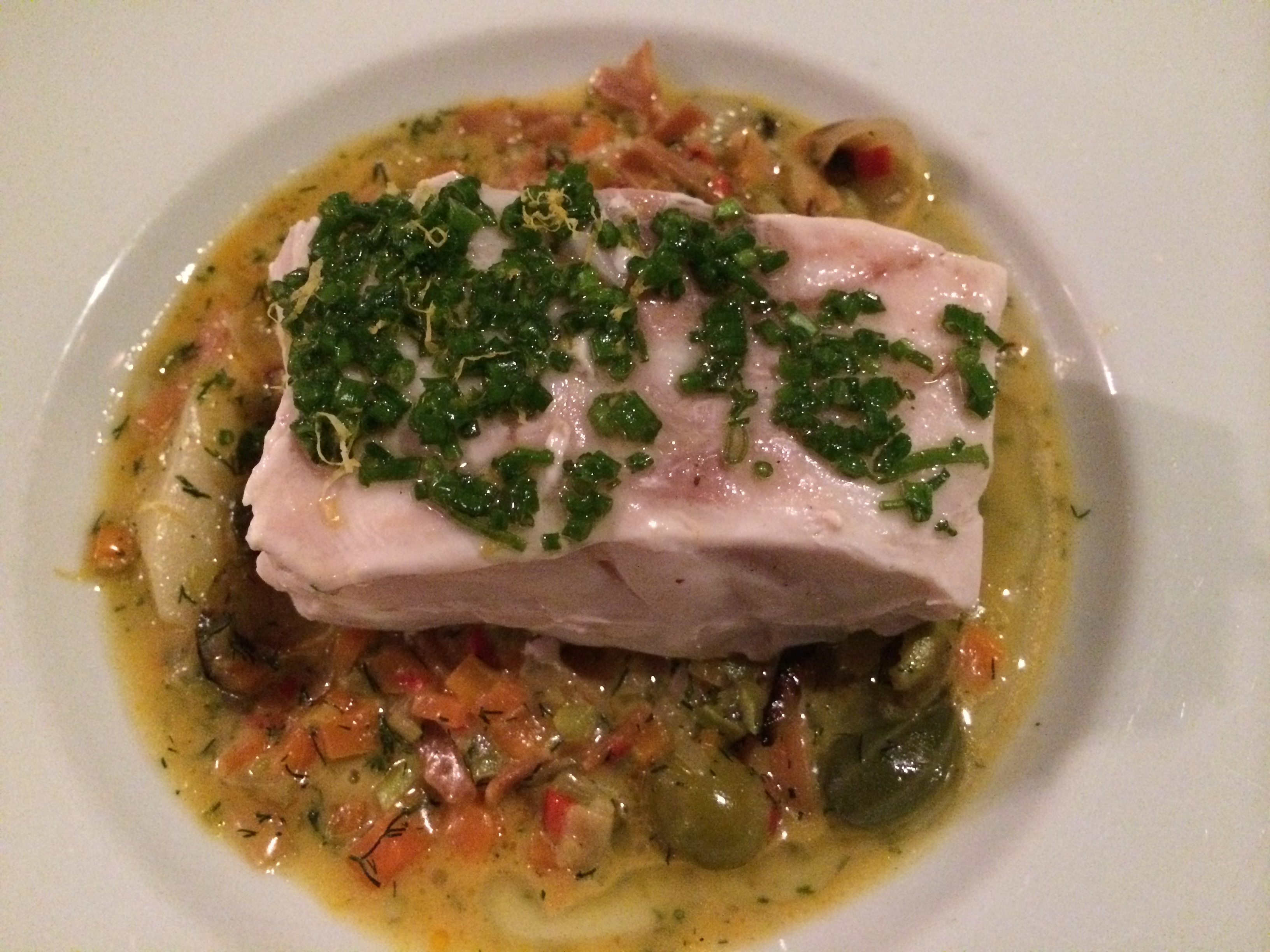
Slow Cooked Grouper, Sun Chokes, Whole Wheat Erişte, Halhali Olives, Chive-Fig Vinaigrette - Mikla, Istanbul, Turkey
Slow Cooked Grouper, Sun Chokes, Whole Wheat Erişte, Halhali Olives, Chive-Fig Vinaigrette – Mikla, Istanbul, Turkey

Those who know me well, know that I dearly love lamb shanks and I would certainly proclaim that smoked eggplant is one of my favourite things, but I was looking for a lighter option and something that is a little less familiar and so I chose Grouper for my next course.

The wine match was an Anfora 2010 Chardonnay Reserve again from the Denizli region, near Pamukkale in Turkey. A beautiful golden yellow colour, the wine was served chilled, and had a glorious bouquet on the nose. I kept thinking that this was one of those wines where you wish you could bottle the perfume and savour it again and again. It smelt of honey, pears, roasted nuts and the toasty flavours of French Oak, indeed an excellent match for the thickness and rich flavour of the fish. This wine regularly features on the best Turkish wine lists.

A lovely tasting meal with a myriad of ingredients and flavours working well together. Chives and fresh lemon zest on top of the grouper, thick green olives in a sauce thickened by thin strips of pasta (or eriste) and the beautiful flavour of fresh dill, which is a staple ingredient of most Turkish cuisine.
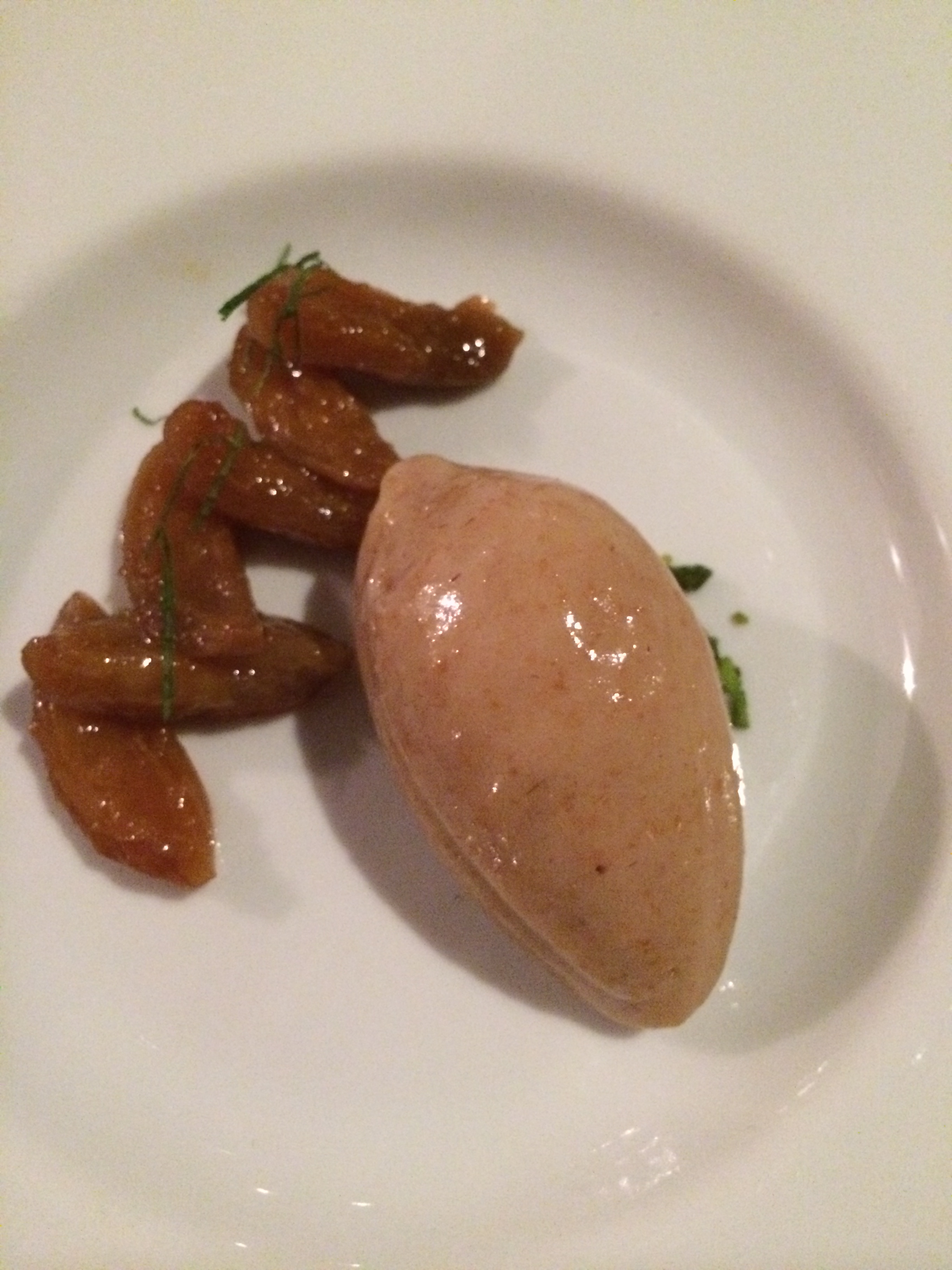
İhsangazi Siyez Bulghur Ice Cream, Confit Malatya Apricots - Mikla, Istanbul, Turkey
İhsangazi Siyez Bulghur Ice Cream, Confit Malatya Apricots – Mikla, Istanbul, Turkey

And finally the dessert course. The dessert selection on the tasting menu didn’t appeal as I had indulged in cheese and candied pumpkin on my food tour earlier in the day, so I opted for the healthier sounding option of Apricot & Bulghur which consisted of İhsangazi Siyez Bulghur Ice Cream and Confit Malatya Apricots.

The apricots were fresh and had a wonderful natural sweetness. From their slightly brown colour, you could tell they were preservative free with the confit cooking method helping to soften their texture and retain their moisture. The ice cream was served on a bed of finely crushed pistachios which added a little extra crunch and flavour, to the fine granules of burghul wheat in the creamy mixture. It was a lovely dessert and I’m glad I chose a dish that was elegant in its simplicity and taste.

The matched wine was a Doluca Safir 2011 Semi-Sweet White Wine, again from the Aegean region and made from Muscat grapes. Sweet to taste, the wine had hints of lime and lychees on the nose and was pale lemon in colour and was another excellent choice.

I enjoyed my dining experience at Mikla and am glad that I had the opportunity to enjoy a modern interpretation of Turkish cuisine, complimented with a selection of beautiful award-winning Turkish wines from the Aegean region and outstanding views of Istanbul. Thanks for the tip Paul!

http://www.miklarestaurant.com/en

Uncorked Wine Tours – Cooking Workshop, Santiago Chile

It’s a privilege to be able to travel the world and experience different cultures, languages and cuisines. Whenever I have the opportunity, I indulge in my love of cooking and register for a cooking class so that I can continue to enjoy the memories and share my gourmet experiences with my family and friends. Connie and Jose from Uncorked Wine Tours also offer cooking workshops that help you to create authentic Chilean food at home, with each course matched with a premier wine from the key wine regions of Chile.

Two couples on their honeymoon from the US were my fellow cooking companions for the Saturday evening class, and we all became acquainted over a sample of delicious cheese marinated with oil and green peppers, served with toasted bread before our class commenced. The menu for the evening showcased authentic Chilean cuisine commencing with the renowned cocktail, Pisco Sour.

Although we made the Peruvian version with egg white and Angostura bitters, Connie expertly guided us through the preparation of the cocktail including the shaker technique to ensure that the drink had enough foam. So with a little trepidation, I mixed my drink and while it didn’t look too bad, I needed a bit more practice at using the cocktail shaker to achieve the fluffy foam appearance that a good Pisco needs.

Quietly sipping on our drinks, we then watched Connie demonstrate the preparation of a chanco en piedra, which is a version of Chilean salsa called pebre made from garlic, green chilli or peppers, tomatoes and salt flakes ground into a paste or sauce-like consistency in a mortar and pestle. It was delicious with toasted bread and cut through the acidity of the Pisco.

Next Connie made pebre which is typically served as an accompaniment and is made from finely chopped green pepper, coriander, tomatoes, white onion and olive oil. The pebre was going to be served later with our meat course.

I have been wanting to learn how to make ceviche for a long time and after a constant two week diet of ceviche at different restaurants in Santiago, I was eager to learn how to cut the raw fish properly so that I could have the confidence to prepare it at home. Connie was extremely gracious in letting me come to the class earlier than the starting time so that I could get some practice cutting the fish into small bite-size portions for the dish that we would be preparing in the class.

Whilst ceviche looks like a simple dish, there are a number of little things that you need to be cognisant of, so that the acidity of the lime juice does not overcook the fish. In teams, we all took up different tasks and positions to add quantities of fish, shrimps, salt, chillies, whilst someone else was constantly using their hands to ensure that mixture was evenly combined with the lime juice and ice cubes in the bowl. It was a bit of a delicate balancing act to ensure that we had the right quantities of salt and citrus and as we continued to mix the ice cubes to bring the fish and flavours together, resulting in a beautiful leche de tigre juice for the ceviche. With the hard work over, we enjoyed eating our ceviche with a chilled Sauvignon Blanc that Connie had selected for us to enjoy with the meal.

Every country has their own interpretation of a crème caramel and for Chile, it is Budin del Cielo. After using small amounts of palm sugar syrup to line a flan dish, we poured a mixture of condensed milk, eggs, milk and vanilla extract into the dish which is then placed in the oven in a water bath. When cooked, it is chilled in the fridge until ready to be served for the dessert course.

The next course on the menu was Empanadas de pino which is another staple of South American cuisine. Connie showed us how to make her preferred but simple version of the pastry with lard, flour, warm water and salt. Whilst on the stove, we prepared the onion and meat mixture with a combination of spices for the filling. Rolling out the pastry, we all got to work preparing our empanadas with the meat, a piece of boiled egg, black olives and raisins.

While the empanadas were cooking in the oven, our next task was to make the mixture for Chupe de jaiba which is a creamy seafood casserole or stew made with crab meat and shrimp, with a crust of gratinéed Parmesan cheese. Following the recipe that had been prepared for us, we created a delicious thick mixture which was then prepared into gratin dishes and decorated with crab claws and cheese, ready to go into the oven.

With all the hard work and preparation completed, it was time to indulge and enjoy the fruits of our labour. Connie selected a Max Reserva Carmenere to match the beautifully cooked meat empanadas and pebre. Then it was time to eat the deliciously creamy and cheesy Chupe de jaiba.

Everyone has just enough room for a dessert course, and with the Budin del cielo chilled, the flan was turned out onto plates to let the syrup run over the plate. Connie had prepared a few sauces and bowls of fresh blueberries, mint and strawberries and we had the opportunity to prepare and decorate our own plates, which brought out the artist in all of us.

Content but supremely full, it was time to say “Gracias!” and bid farewell to Connie, Jose and to Chile because it was time to fly back home to Australia and get a good night’s sleep on the plane trip home.

http://www.uncorked.cl/tours/tours_detalle_es.php?ID=18

Uncorked Wine Tours – Casablanca Valley, Chile

It’s been a while between postings, or drinks you might say, and while I’ve been absent from cyberspace, I took the opportunity to affirm my love of wine and complete the Wine and Spirit Education Trust Level 2 qualification. The eight week course provided an understanding of old world and new world wines and an overview of wine production and grape varietals in France, Italy, South Africa, Australia, New Zealand, Germany and Chile. One evening, during a lesson on Pinot Noir, I was intently studying a map of Chile and its major wine growing regions and the very next day, I was asked if I would like to travel to Santiago on business. Naturally I said yes and started planning my next wine and food adventure in Chile as soon as I could.

After an intensive search on Google for wine tours near Santiago, I came across Uncorked Wine Tours and had the good fortune to book a semi-private tour to the Casablanca Valley, an internationally recognised producer of premium Chardonnay, Sauvignon Blanc and Pinot Noir wines.

http://www.uncorked.cl/tours/tours_lista_es.php

Bodegas RE

It was an early start to a Saturday, but the sun was shining and I was excited to be out of the office and ready to explore the Chilean countryside. I met Stefan, my guide for the day at the hotel, and we headed downtown to meet the other three guests who had travelled from the US and were also looking forward to the opportunity to enjoy Chilean wine. After a short drive out of the city, the first stop of the day was Bodegas RE. The family behind the Bodegas RE vineyard is well known within the Chilean wine industry, however this new and innovative vineyard takes pride in experimenting in diverse varietals of grapes that are traditionally known to Casablanca Valley and Chile, and the results are bold and exciting wines.

After a walk to the vineyard and a tour of the “nursery” where olives and stone fruits were fermenting and maturing into oils and liqueurs respectively, we went through the gift shop and down into the cellar to see examples of ancestral methods of wine production using large clay pots and jars.

The wines that we had the pleasure of tasting at Bodegas RE were:

2011 Pinotel (70% Pinot Noir, 30% Muscatel): a dry, crisp wine, with a bronze-pink colour and a floral, orange blossom and jasmine perfume;

2011 Chardonnoir (55% Chardonnay, 45% Pinot Noir): Champagne recreated as a still wine! Gold-pink in colour complete with yeasty, bready notes, with a slightly sweet dried fruit, apricot aroma with an off-dry, medium sweet finish;

2008 Caberignan (80% Cabernet Sauvignon, 20% Carignan): With hints of ageing and a ruby garnet appearance, with black fruits and hints of black pepper and oak on the nose, with a peppery taste on the palate;

2008 Carignan (100% Carignan): Fruit from 60 year-old vines and single vineyard, a superb wine with deep, ruby red colour, a long finish, dry with blackfruit and white pepper on the palate, blackberry and black plum notes on the nose, hints of oak and stewed prunes. A spectacular wine …. I couldn’t help myself and purchased a bottle on my way out through the gift shop!

2009 Valedo (100% Pinot Noir): The word valedo means “veil”. A gold coloured white wine which is vinified like a rosé and then aged under a veil of flor yeast giving the wine very complex aromas of sweet almonds and white pepper.

http://bodegasre.cl/

Loma Larga Vineyards

A little further down the road, we pulled into a winery that is surrounded by natural parkland complete with a mountain range and eucalyptus trees, and it almost reminded me of being back home in Australia.

With vines growing over the surface of the winery and barrel room, our little group enjoyed a private tour of the winery and walked up into the production area to see the wines ready for export to China and wines maturing in oak barrels.

Specialising in producing several red wine varietals and two white wines, the original country farm house at Loma Larga now serves as a tasting room, where we had the privilege of tasting a selection of one white (2012 Sauvignon Blanc) and three red wines 2013 Pinot Noir, 2010 Malbec and 2008 Cabernet Franc).

http://www.lomalarga.com/site/?page_id=34

House, Casa del Vino

The final destination for the day was House (Casa del Vino) which is a unique centre offering wines produced by the Belen Group, educational tours and gastronomy.

Tirazis, which is the Persian name for Shiraz, is the specialty of the winery and is a cool climate Syrah planted with bush-vines in the Casablanca Valley.

After an enjoyable morning of sampling different wines, it was time to enjoy lunch, which was a degustation affair with matching wines.The first course was a ceviche of grouper, salmon and calamari matched with a glass of Morande 2012 Sauvignon Blanc Reserva. Ceviche is a staple of Chilean cuisine and this dish was stunning in its pairing of the different types of fish, including its textures and colours. The citric acidity of the ceviche was matched with a pale yellow fruity wine with green apple citrus flavours.

The next dish was a delicious squid ink risotto with seafood sautéed in butter and topped with parmesan cheese paired with an offering of Morande 2009 Pinot Noir Gran Reserva. The vegetal aromas of mushroom and leather and red fruit flavours typically associated with Pinot Noir were an excellent match with the rice which was a substantial component of the meal.

Carmenère is a red grape varietal that is uniquely produced in Chile. Originally thought to be Merlot, Carmenère is a stunning red wine that defies description but I think everyone should have the pleasure of enjoying. Our third course was a pork loin with bacon, eggplant, tomato, zucchini, potato and salsa verde served with Morande 2011 Carmenère from the Maipo Valley. Absolutely delicious, although I can’t say which I enjoyed more – the wine or the food.

Then just when I thought I couldn’t possibly eat and drink another thing, a glass of golden Morande 2009 Late Harvest Sauvignon Blanc was served with panna cotta, fresh berries and a Shiraz reduction. Both were rapidly devoured, so it must have been good.

Normally after I have been filled to the brim with excellent wine and delectable food, I am in ready need of a small siesta however our next appointment was a private tour of the winery to see how the wine is made in a didactic style. Escorted into a large room with stainless steel tanks (which bore some resemblance to the daleks from Doctor Who), large exotic concrete eggs and oak casks, a sommelier explained the wine making process for producing the special blend of Syrah that the winery is known for. The highlight of the day was definitely tasting two vintages of Syrah directly from the oak barrels.

Just when I thought the fun was about to come to an end, we were escorted into what every serious wine-loving girl needs – a private cellar of Shiraz with a trademark Christian Louboutin red concrete floor. All I need to do now is work out how I can build one into my new apartment.

http://www.housecasadelvino.cl/index_en.html

I had a wonderful day enjoying Chilean wine from the Casablanca Valley and beyond, with many different wines and varietals to taste, and the opportunity to enjoy excellent food. I owe a big thanks to Stefan who made sure I got back home to my hotel safe and sound and that my wine purchases were also intact.